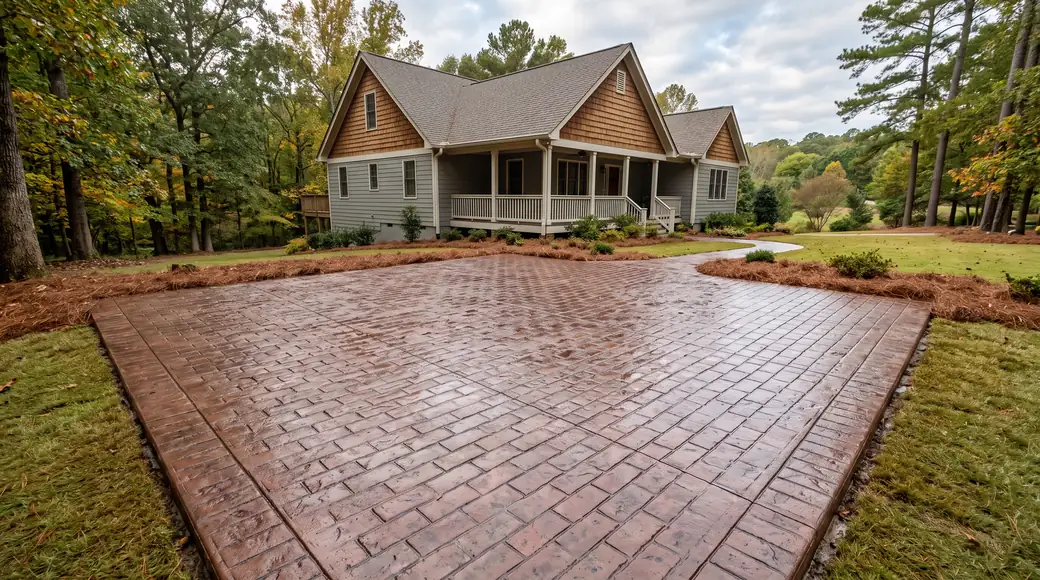
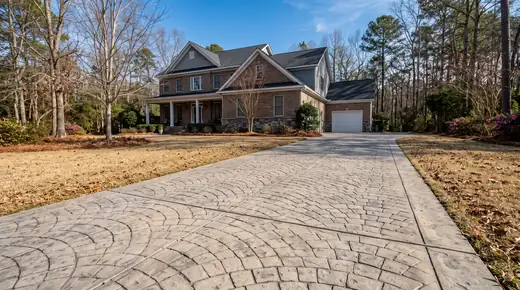
Stamped concrete is a slab with a pattern pressed into the surface while the mix is still workable, and color worked in so the finish runs deeper than a coating. Homeowners choose it for patios, walkways and pool decks where a plain gray slab would look unfinished next to the house. Patterns run from brick and slate to wood plank and cut stone. Underneath the pattern, it is ordinary flatwork: base, reinforcement, thickness, joints.
We are a concrete contractor, and most of what we pour is flatwork: driveways, a sidewalk here and there, patios, and the stamped work that shares every fundamental with them. Savannah and Pooler homeowners call us for new pours and for tearouts of slabs that are past patching. Stamping happens in one window, after the concrete has stiffened enough to hold an edge and before it has gone too far to take one. That window is short.
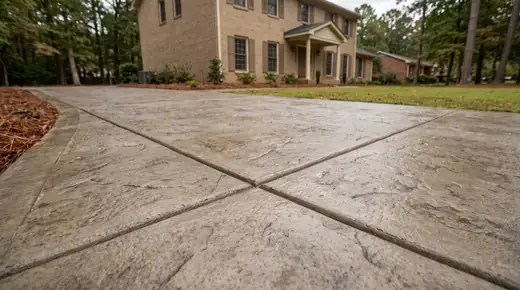
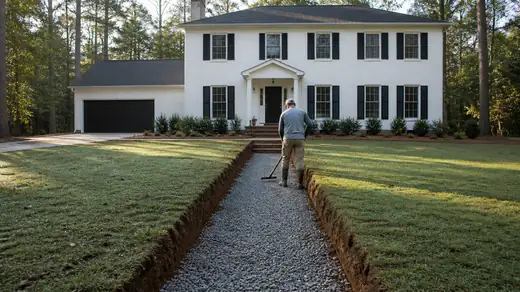
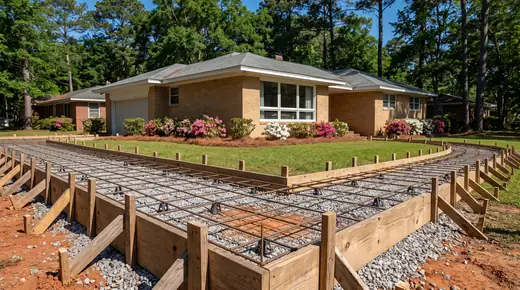
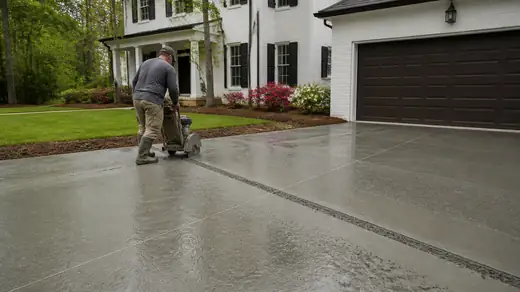
Most stamped concrete that fails was lost before the truck arrived. Base not compacted, so the slab bridges soft spots and cracks along them. No wire mesh or rebar, or reinforcement laid flat on the ground where it does nothing. Joints cut too late. Release powder washed off unevenly, which shows up as blotching once the sealer goes down, and there is no fixing that afterward. None of it is exotic. It is attention, in order.
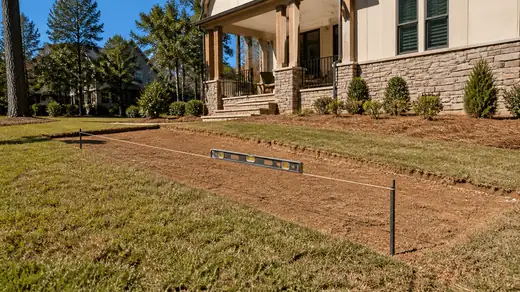
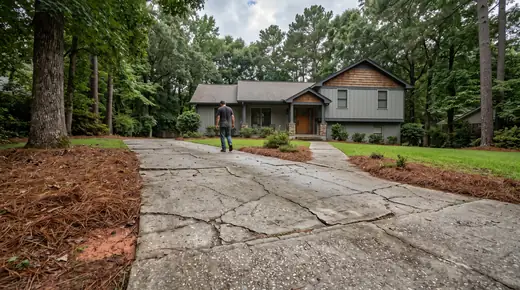
The median home in Savannah was built in 1971, so plenty of the flatwork we replace has been in the ground for decades and owes nobody anything. Getting a new slab to last that long is unglamorous work: forms set true, subgrade compacted, steel held up in the middle of the pour, joints placed where the slab wants to move anyway. We would rather spend an extra hour on the base than come back to look at a crack. Call for a free estimate.