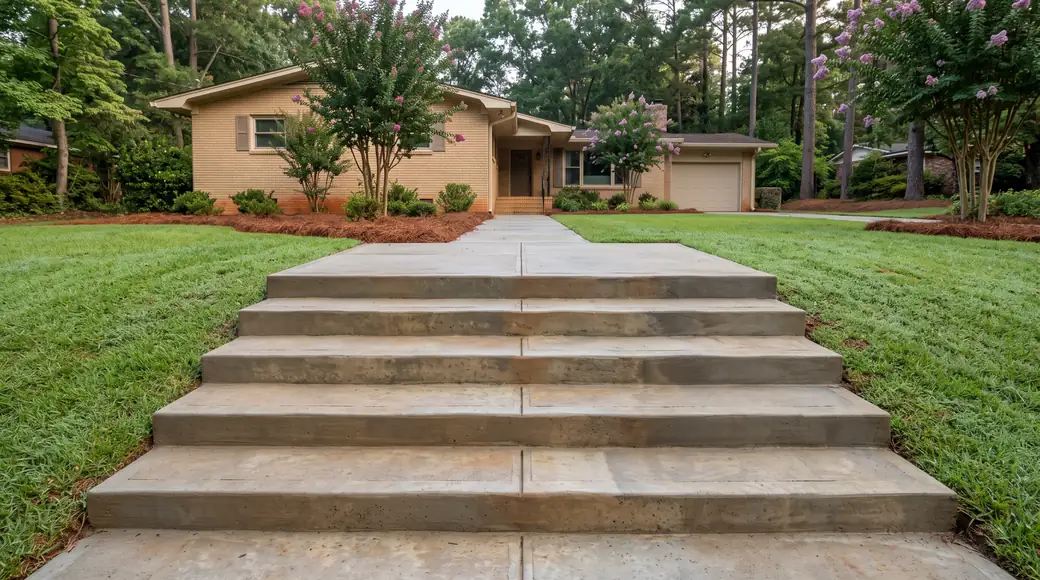
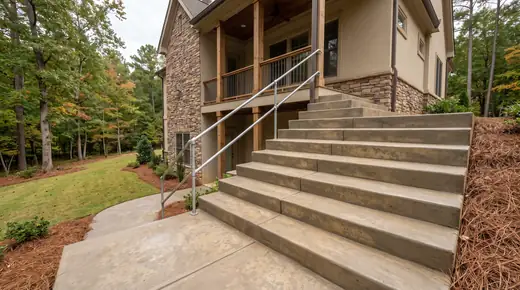
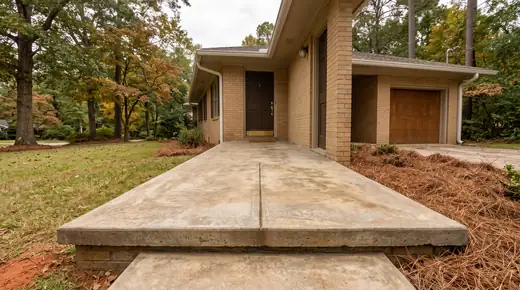
Savannah's housing stock runs old. The median home here was built in 1971, which means a lot of the front steps in this city are more than fifty years into a life nobody designed them for. We pour steps, stoops and landings for houses like that: replacements for sets that have shifted, new work where a porch or back door has been rebuilt, and side entries that were never finished in concrete to begin with. Some are two risers. Some are eight.
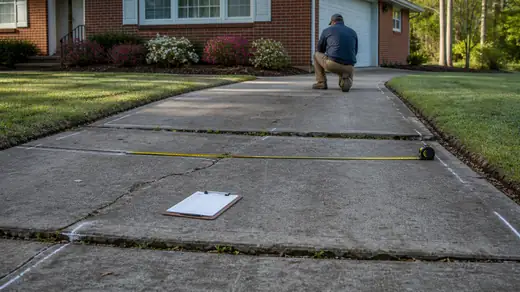
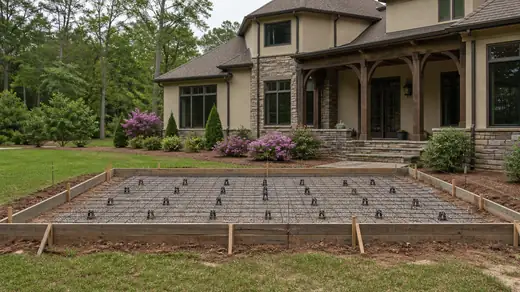
Every set starts below grade. We dig a footing, set forms square to the house, and tie rebar through the footing into the step mass so the whole thing moves as one piece. Wire mesh or bar goes into the landing depending on its size. Risers get measured, not eyeballed, so the rise stays the same from the bottom tread up to the door. Uneven risers are what people trip on.
Old steps fail in a few predictable ways. The tread noses break off first, because they are the thinnest part and take the most traffic. Steps pull away from the house when the original pour had no footing under it, and the gap widens a little every year. Patching buys a season or two. Once the mass has cracked through, or the top step sits low against the threshold, patch work stops being worth doing. We say so plainly.
Finishes are a choice, not an upgrade you have to take. A broom finish on the treads gives the most grip, and it is what most houses of this era had from the start. Stamped or colored concrete works where the steps meet a stamped patio or a newer concrete driveway and you want the surfaces to read as one. Exposed aggregate wears well and hides scuffing. Treads can stay broomed while the landing gets the pattern.
Getting a set of steps right is mostly about what happens before the concrete shows up: footing depth, drainage running away from the house, and the layout of the risers. None of that is visible afterward, which is exactly why it gets skipped. We do this work throughout Savannah and out toward Pooler, on the same terms in every neighborhood we serve. Call for a free estimate on your steps, stoops or landings.