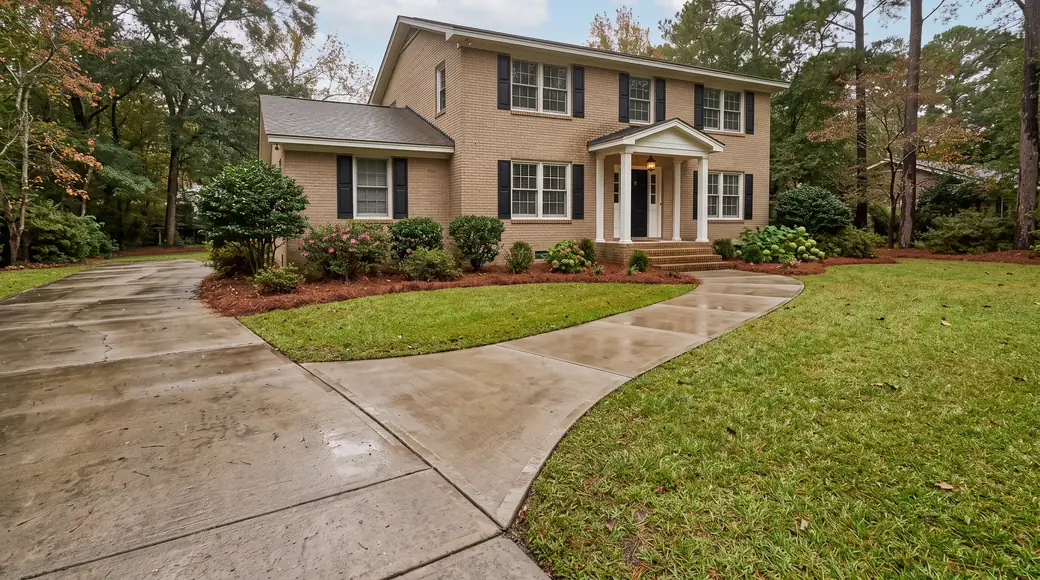
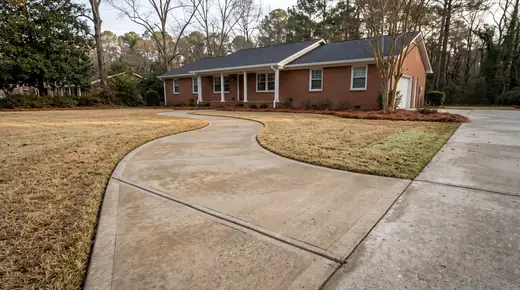
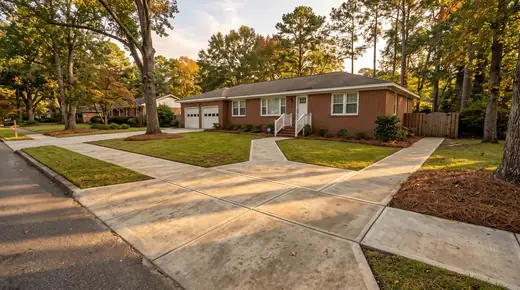
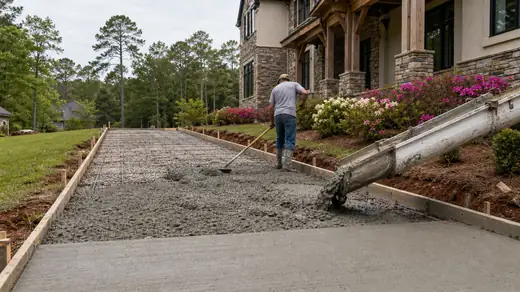
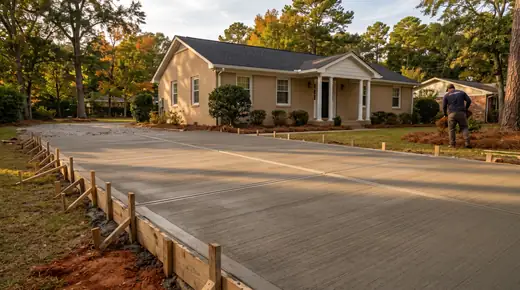
A walkway is the piece of concrete you use every day and think about least: the run from the street, the driveway or the porch steps to your front door. Savannah's housing stock has a median build year of 1971, so many of the front walks we replace were poured with the house and have carried traffic ever since. Those older walks tend to be narrow, thin and set tight to grade. We pour new ones as flatwork sized for two people to walk side by side without one stepping into the grass.
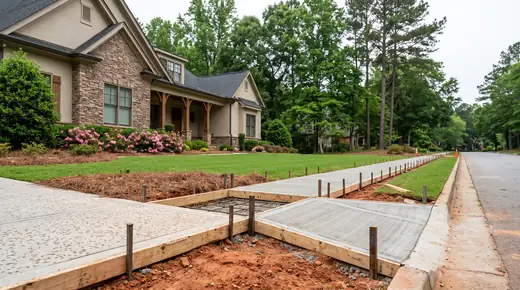
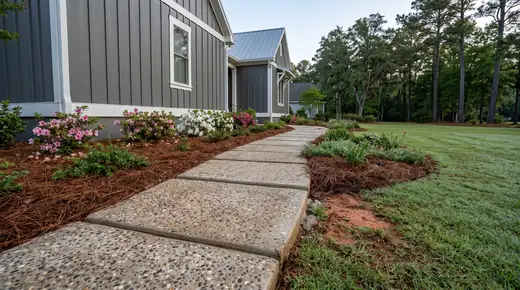
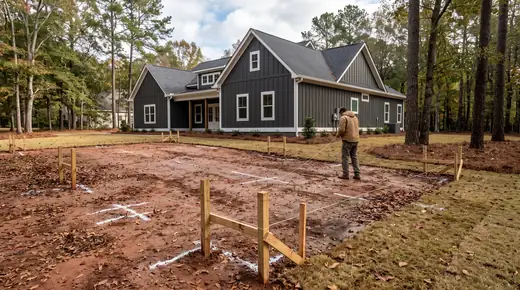
Layout comes first. We chalk the line the walk will follow, check it against the door, the drive and the way people actually cut the corner, then form to that line instead of to whatever the old walk did. Base gets compacted before anything goes in it. Wire mesh or rebar goes in depending on the width and what the slab has to span. Finish is your call: broom for grip, exposed aggregate, stamped, or colored concrete chosen to sit well against brick.
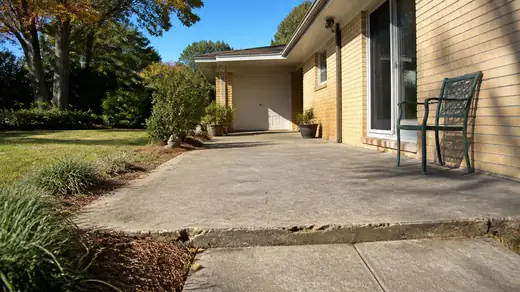
Most of what fails on an older concrete sidewalk fails underneath it. A slab poured over loose fill settles in sections, and the joints step apart until one panel stands proud of the next. Roots lift the panels near mature trees. Thin pours crack straight across because nothing inside them was holding the two halves together. Patching a walk in that condition buys a season or two and hides the reason it moved. When we find that, we say so, and we take the old slab out rather than pour on top of it.
Getting a walk right is mostly unglamorous work finished before the truck arrives: grade, compaction, edge support where the slab meets soft ground, forms that hold a straight line, thickness suited to the traffic. Curing matters as much as mixing does. We take our time on those steps because they are the ones nobody can correct later without breaking out concrete and starting again. Call for a free estimate on a walkway or concrete sidewalk installation, whether your place is in town or out toward Pooler.