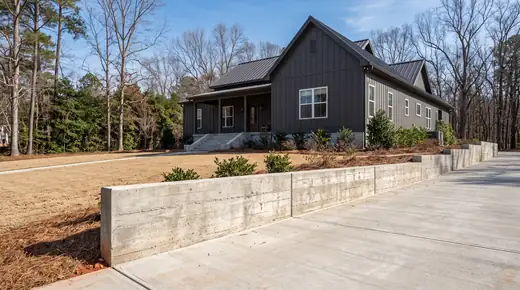
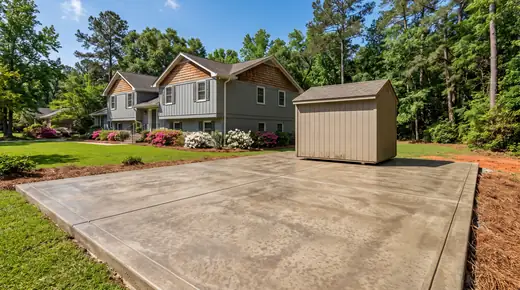
Every job starts with a look at the ground. We walk the site with you, measure the area, and note the things that actually decide the work: where water runs off, how a truck gets in, what the existing slab is doing. Questions get asked and answered on the spot. If you want a patio and the ground says something different is smarter, we say so then, not after the forms are set. Then we go write it up.
What we look for on that first pass is mostly failure. Old concrete tells you why it cracked if you read it. A slab heaved at one corner, a driveway pitched back toward the garage, sidewalks that settled where a trench was cut and never packed right. Much of the housing around here has a median build year of 1971, so we are often working next to concrete that has already had a long life. That history shapes the plan.
The estimate comes back in writing with the scope spelled out. Thickness, square footage, reinforcement, finish, where the control joints land, what we haul away, what we leave behind. You should be able to read it and know exactly what will be sitting there when we pull out. Vague scopes are how people end up arguing in a driveway in month three. Ask about anything on it. Changes are easy on paper and expensive in wet concrete.
Permits go through the City of Savannah where the work sits inside city limits, and we file them rather than handing you a form. Some flatwork needs review and some does not, and the answer depends on what is being replaced and where it falls on the lot. We would rather wait on paperwork than pour something that has to come back out. If an inspection is part of it, the schedule bends around the inspection.
Demolition is the loud day. Old concrete gets broken out, loaded and hauled off, and we protect what stays: irrigation heads, gas and water lines, the lawn where the truck has to park. Sawcutting keeps a clean edge where new work meets old. Sometimes we find the reason for the original failure buried under the slab, a soft spot or bad backfill from a trench somebody cut years ago, and that gets fixed before anything else moves.
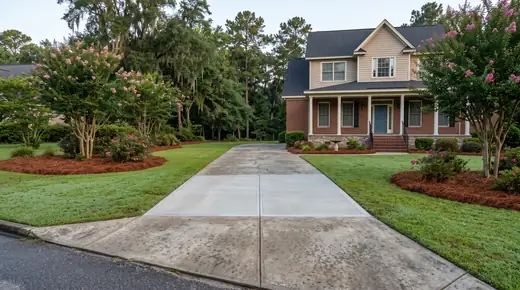
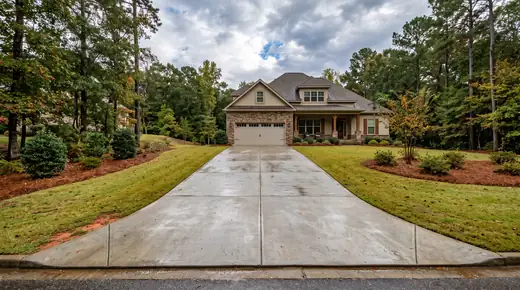
Base work is the part nobody sees and everybody feels. We grade the subgrade to the slope the drainage needs, dig out anything soft, bring fill up in lifts and compact each one. Concrete does not correct a bad base. It follows the base, then it cracks along the same line where the base gave way. A concrete driveway that lasts is mostly a story about what happened underneath it before a single truck showed up.
Forms go in next, set to the grade lines and braced so they hold their shape under load. Reinforcement depends on the job: rebar on driveways or anything carrying vehicle weight, wire mesh where the loading is lighter, chairs to hold the steel in the middle of the slab instead of lying in the dirt. Steel sitting on the bottom of a pour does nothing at all. Thickness gets confirmed before the concrete is ordered.
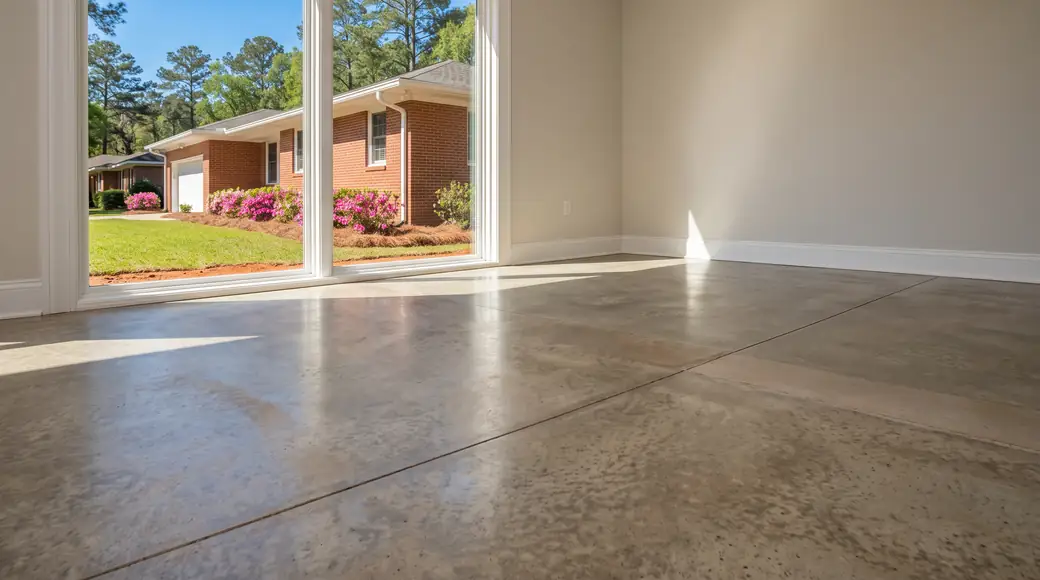
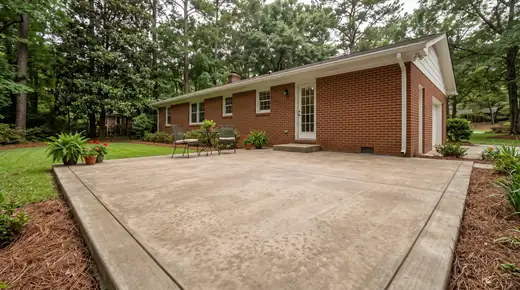
Pour day starts early and does not slow down. The concrete arrives on a schedule, gets placed, screeded and floated, and it waits for nobody. Finishing is where a stamped or colored slab is won or lost, and the window for stamping is short. Exposed aggregate, broom finish, stamped pattern: each one has its own timing, and we crew the day around whichever you picked. Concrete installation is a trade with no undo button.
Curing takes patience after the noise stops. We cut control joints so the slab cracks where we tell it to instead of wherever it likes, and we tell you when to walk on it and when to drive on it. Rushing that is how a new concrete driveway earns its first crack. We pull the forms, clean up the edges, haul off the last of the debris, and walk the finished work with you before we call it done.