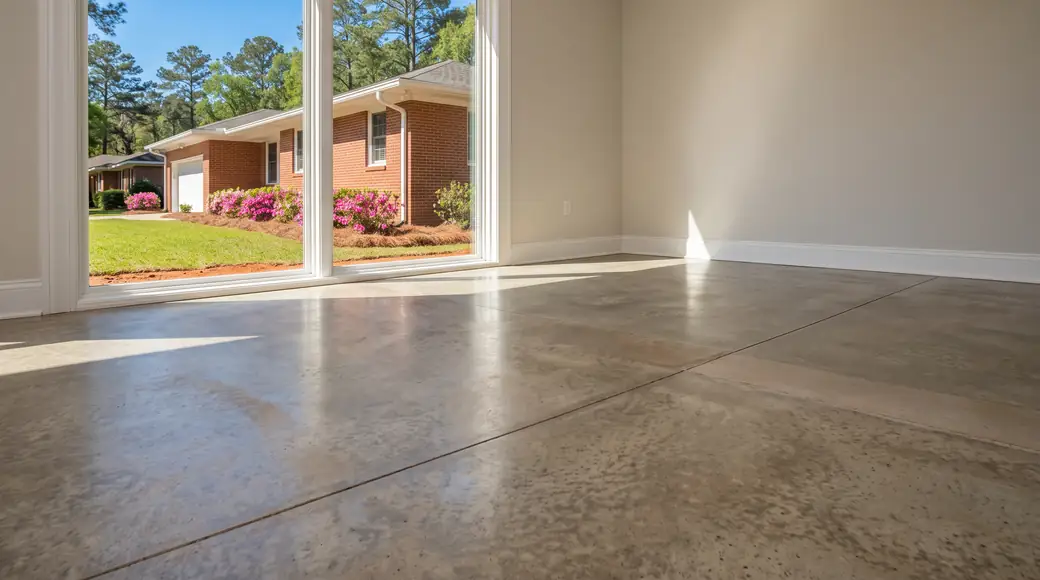
Polished concrete floors start with the slab already under your house. We grind the surface through progressively finer diamond steps, densify it so the top layer resists wear, then bring it up to the sheen you want. Nothing gets laid on top. The floor is the concrete itself, refined, which is why it takes furniture, dog claws and a wet mop year after year without complaint. Plenty of homes here have a slab worth uncovering, sitting quietly under carpet or vinyl that gave up a decade ago.
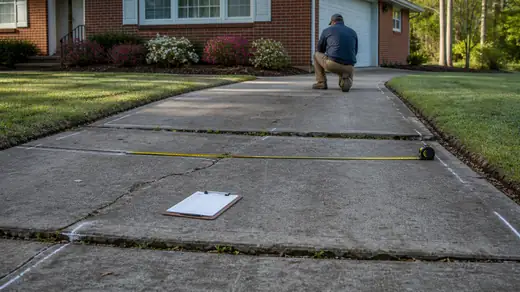
Median build year in Savannah is 1971, so the concrete under most of these floors has had roughly fifty years to cure and stop moving. That works in your favor. An old slab is hard, fully dry, and long past the shrinkage that makes fresh flatwork unpredictable under a polisher. It also carries its history. Adhesive from three generations of flooring, a patched plumbing trench, a hairline crack that opened early and settled down. We read all of that first.
Coverage runs across Savannah, Georgia and out to Pooler, Bluffton and Hilton Head Island, and it is the same crew and the same equipment wherever the address falls. A slab in one of those towns gets the same grinding sequence and the same standard as a slab in any other. We schedule by what the job needs, not by how far the truck has to go. If you are inside that range, call for a free estimate.
Most of what goes wrong traces back to somebody skipping the assessment. A slab poured soft on top will expose aggregate faster than expected, which is fine if that is the look you wanted and a problem if it is not. Old patches take polish differently than the concrete around them. Moisture coming up through a slab with no vapor barrier will haunt a coated floor. We tell you what we find, including the parts that are not what you hoped.
Getting a floor right is mostly a matter of not rushing the early passes. The first cuts set the flatness and decide how much aggregate shows, and no amount of fine polishing later will fix a sloppy start. We contain dust, keep the shop vacs running, and work in sequence rather than jumping ahead to the shine. That is slower than some outfits move. It is also why the floor still looks like this in ten years.