+1 912-206-8811
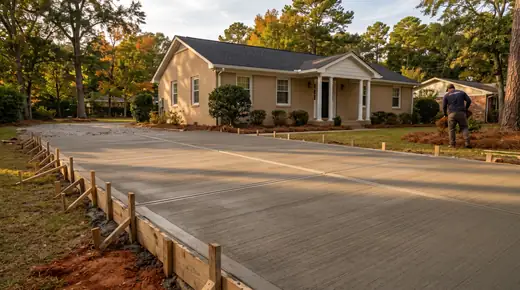
Wide view of finished concrete flatwork across the front of a home at a tan-brick colonial in Savannah, GA, in late afternoon light.

Colored Concrete in Savannah, GA

Colored concrete is concrete with the color built in, either pigment mixed through the batch before the truck leaves the plant or a hardener worked into the surface while it sets. We pour it for patios, walkways, pool decks and driveways around Savannah. Some of it stays plain and flat. Some of it is stamped concrete, where the pattern and the color are doing the work together. What you hire a concrete contractor for is a slab that keeps its color.

The order of operations matters more than the color chart does. We strip sod and set grade first, then form, then set wire mesh or rebar depending on what the slab has to carry. Color goes in at the plant or onto the surface, and after that the job is timing: finishing when the concrete is ready, not when the crew is standing around. Curing gets the same attention the pour got.

Most color problems look like bad luck and usually are not. Blotchy patches come from uneven water in the mix, a slab troweled too early, or two loads batched a little differently. Efflorescence leaves a white haze that reads as faded color. A sidewalk poured tight against an older walk will crack wherever nobody cut a joint. Almost all of that is decided before anyone opens a bag of pigment.

Doing it right costs more in preparation than in material. The median home here was built in 1971, so we are often tearing out an old slab and rebuilding the base underneath instead of pouring over the problem. Thickness, joint spacing and a sealer suited to the finish are where the real money goes, and they are the parts you cannot add later. Call for a free estimate.

Call +1 912-206-8811

Licensed, Bonded, and Insured ยท A combined 15 years of experience

Get Your Free Quote

We warranty all of our work because we believe in what we do.

What Colored Concrete Involves

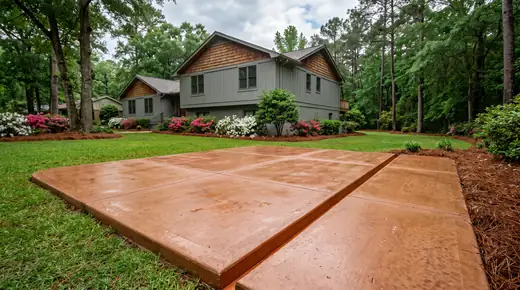
Concrete patio in terracotta integral colour running full depth at a grey split-level home in Savannah, GA, after a rain shower.

Integral color concrete

Pigment goes into the mix at the plant, dosed against cement weight, so color runs the full depth of the slab instead of sitting on top. Chips and saw cuts stay the same shade. A concrete contractor tinting by the bucket on site will not match load to load.

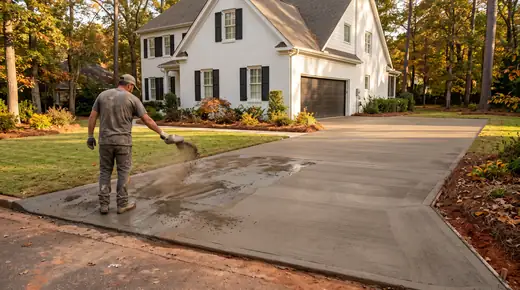
Dry-shake colour hardener being broadcast onto fresh concrete at a painted-white-brick two-story home in Savannah, GA, in late afternoon light.

Concrete color

Color comes three ways: integral pigment, dry-shake hardener troweled into the surface, or acid stain after cure. Stamped concrete takes two, a base with a darker release. A concrete sidewalk in the right-of-way pulls a City of Savannah permit, commercial concrete included. Sealer keeps the tone from washing pale.

What Savannah Properties Need From Colored Concrete

Colored concrete gives you a slab that belongs to the house instead of one that just sits next to it. The median Savannah home was built in 1971, which means most of the driveways and walks we tear out have been gray, patched, and mismatched for a long time. Integral color runs through the full depth of the mix. A dry shake sits on the surface and takes a harder wear layer. Both beat paint, and both outlast anything rolled on later.

Most of this work lands on driveways, front walks, back patios, and pool decks, sometimes all four on the same property. Color pairs naturally with stamped texture, and it does honest work on a plain broom finish too. On a 1970s ranch with brick and mature plantings, a driveway in a warm tan or a muted slate settles into the yard instead of announcing itself. Exposed aggregate takes color differently, since the stone carries most of the look and the paste around it fills in the rest.

The failures people call us about are almost always color, not concrete. Blotching from water added at the truck. A visible line where the second load met the first and cured a shade off. Efflorescence hazing a patio white a few months in. Sealer that chalked and left a good slab looking tired. None of these are mysteries. They come from a pour that got handled as gray concrete which happened to have pigment in it.

Getting it right is mostly discipline before the concrete ever arrives. One supplier, one batch ticket, the same pigment load on every yard, and enough trucks ordered that the slab goes down in a single continuous pour. Subgrade compacted flat so thickness stays even, because thin spots and thick spots cure at different rates and read as color variation later. Rebar or wire mesh placed and tied, not thrown in. Control joints cut where the slab wants to crack anyway.

Half a century of additions leaves a lot of properties here with flatwork poured in three or four separate eras, none of it matching. A single color plan across the driveway, the walk, and the patio pulls that back together, and the same approach holds on commercial concrete where an entrance and its sidewalks need to read as one job. We handle the install start to finish, from tear out and forming through the final cure. Call for a free estimate on colored flatwork.
How a Colored Concrete Job Runs in Savannah

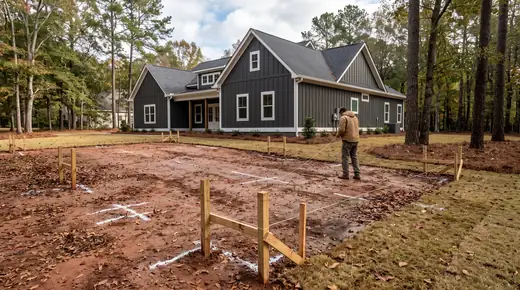
String lines and grade stakes laid out across a yard before a pour at a charcoal farmhouse-modern home in Savannah, GA, after a rain shower.

Step 1: Site Evaluation

We walk the area with you and look at what the concrete has to sit on. Grades, drainage, tree roots near the slab line, and how a truck gets close enough to pour. On homes from the seventies, we check whether the old base was ever compacted.

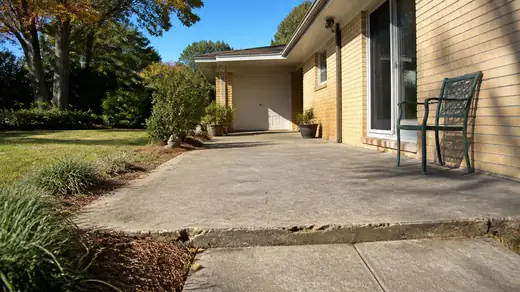
Worn back patio and steps of the kind a written estimate prices at a buff-brick ranch home in Savannah, GA, in clear late-morning sun.

Step 2: Written Estimate and Permits

You get the scope in writing: square footage, slab thickness, reinforcement, the color and release method, and the joint layout. We handle permit paperwork where the job needs it. Nothing starts until you have read the numbers and agreed to them.

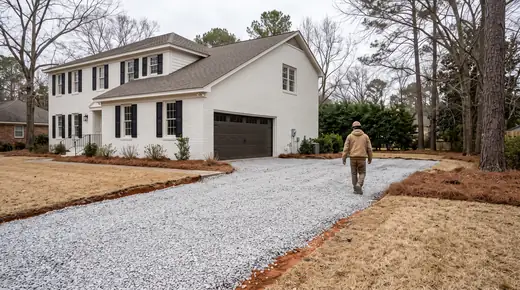
Broken-out concrete removed and the base rebuilt before a new pour at a painted-white-brick two-story home in Savannah, GA, under an overcast sky.

Step 3: Demolition and Base Prep

Old concrete comes out in sections and gets hauled off. Then we cut to grade, lay compacted graded aggregate base, and run a plate compactor over it in lifts. Skipping compaction is what causes settling cracks two winters later, so we do not skip it.

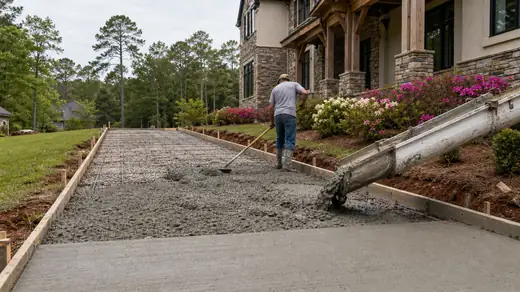
Concrete coming down the chute into formed driveway bays at a stacked-stone and stucco home in Savannah, GA, under bright midday cloud.

Step 4: Forming, Steel and the Pour

Forms get set to line and pitched for drainage away from the house. Rebar on chairs for driveways, wire mesh or fiber for sidewalks, held up off the base rather than laid flat. Concrete installation runs four inches for walks, thicker where vehicles turn.

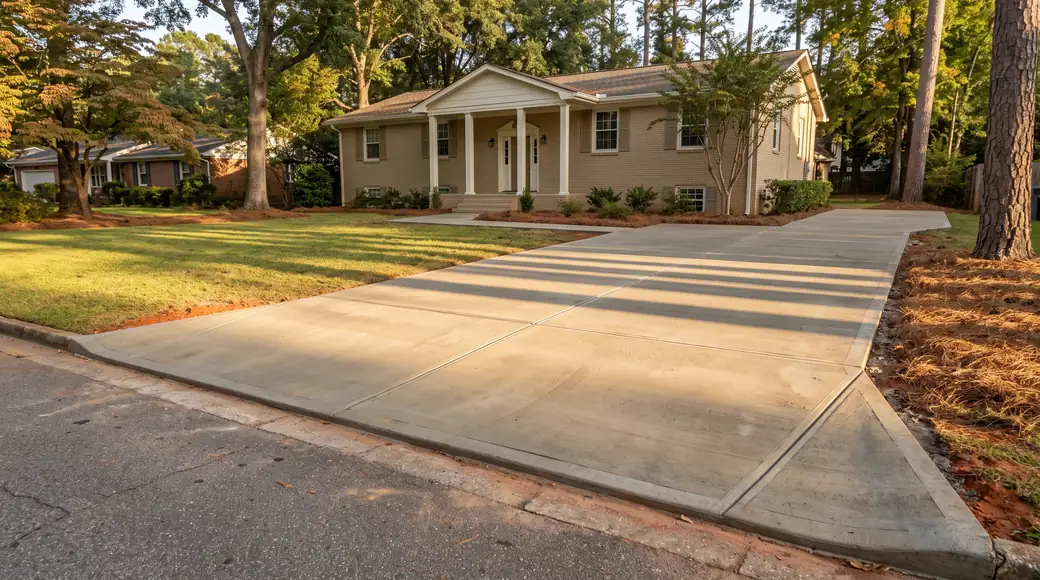
Freshly finished concrete slab curing under a clean broom texture at a tan-brick colonial in Savannah, GA, in late afternoon light.

Step 5: Finishing, Curing and Final Walkthrough

Color goes in integrally or as a hardener, then we float, texture, and cut control joints before the slab decides where to crack on its own. Curing compound seals in moisture. We walk the finished driveways and sidewalks with you and explain the cure schedule.

Colored Concrete Pricing in Savannah, GA

Most of what sets the price of a colored concrete job is visible from your own back door. We price the site, not the square footage alone: what has to come out first, what a truck can reach, how thick the slab has to be for whatever ends up parked on it. Here is what moves the number, in both directions.

What changes the priceWhich wayWhy
An old slab still in the groundcosts moreBreaking out cracked concrete and hauling it off is its own day of work before any new flatwork starts. In housing stock with a median build year of 1971, we often find a second slab underneath.
A clear path for the truck to back incosts lessConcrete that runs down the chute lands where it belongs. Wheelbarrowing through a gate or a narrow side yard adds hands and hours.
Slab thickness and rebar in place of wire meshcosts moreA patio carries foot traffic. A driveway that takes a loaded truck needs more depth and rebar set on chairs, and that steel and concrete get billed.
Ground that already drains away from the housecosts lessWe can hold the grade you have. Water that stands means regrading, a drain line, or a deeper base before we pour.
Large tree roots crossing the workcosts moreRoots get cut back and the void compacted. Left alone, they lift the slab and split the color right at the crack.
Soft or filled subgradecosts moreBase stone and compaction cost less than a slab that settles. Where a probe sinks easily, we add stone.
Straight runs and square cornerscosts lessCurves, steps and a sidewalk that ties into an existing walk take more form work and more hand finishing.

Compare bids line by line rather than by the total. Ask each contractor the slab thickness quoted, whether reinforcement is rebar or wire mesh, how much base goes under it, who hauls the old concrete, and whether the color is integral or surface applied. Numbers far apart usually differ there.

Colored Concrete: Questions We Are Asked Most

Can colored concrete on a Savannah property be recolored later?

Yes, within limits. Integral color lives in the slab itself, so changing it means working on the surface: a stain, a dye, or a tinted sealer over what is already there. That reads differently than color mixed through the concrete, and it will need renewal on a cycle. If you want a different look on an existing patio or driveway, tell us what you have and we will look at it.

Does colored concrete cost more per square foot than plain?

Yes. Pigment is an added material, and color work slows the pour down because the finish has to stay even across the whole slab. Integral color costs more than a surface application because the pigment goes through the full depth of the mix. Darker and more saturated colors use more pigment than earth tones. The flatwork underneath it, the base, the rebar or wire mesh, does not change.

Can you match color to existing concrete on my Savannah property?

Close, not exact. Old concrete has weathered, held dirt, and cured under conditions nobody recorded, and a new slab beside it starts fresh. We can get within a range that reads as intentional, and we mock up a sample so you see the color before we pour. Savannah housing runs to a median build year of 1971, so a lot of the concrete we match against is decades old.

How consistent is the color across a large Savannah pour?

Consistent, if the mix is controlled. Every batch gets the same pigment dose from the same supplier, and we plan the pour so the slab goes down in one continuous run rather than stopping and restarting. Variation comes from water added on site, from finishing at different stages of set, and from uneven curing. We keep the crew moving at one pace across the whole surface.

Will colored concrete fade in Georgia sun?

Some, over years. Integral pigments are mineral oxides and hold up well to sunlight, which is why color mixed through the slab outlasts color applied on top. What actually dulls a driveway or sidewalk is surface wear and a sealer that has worn thin, not the pigment giving out. Resealing on a regular cycle brings the depth back. Lighter colors show the change less.

Is color mixed through or added on top in Savannah work?

Both, depending on the job. Integral color goes into the truck and runs through the full slab, so chips and saw cuts show the same color. Color hardener and stains sit on the surface, give a stronger color, and cost less in material. Stamped work often uses both together. We walk through which one fits your driveway, patio or sidewalk.

Get a Free Estimate

Get Your Free Quote

We warranty all of our work because we believe in what we do.

Tap to call +1 912-206-8811